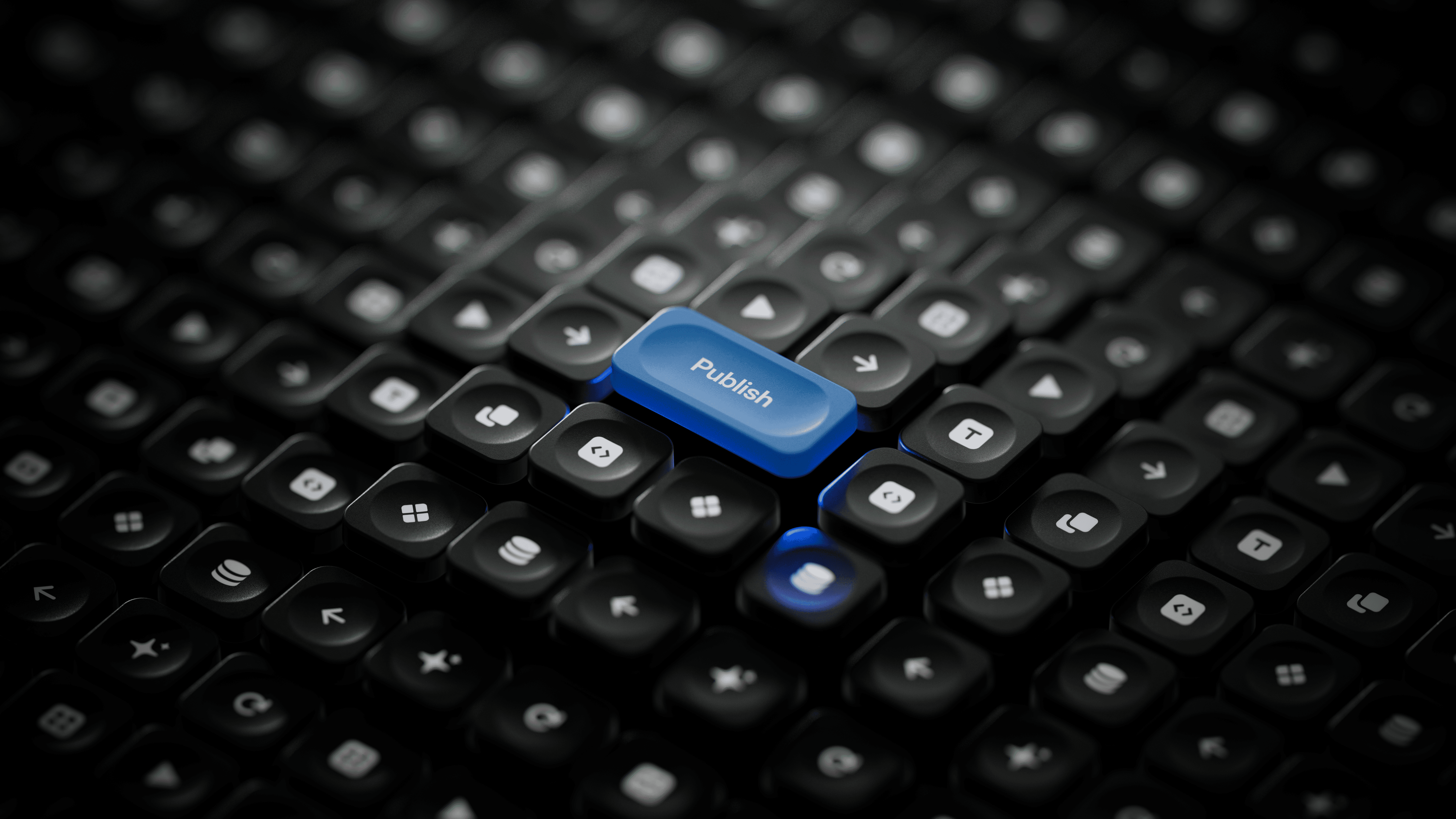
No-Code Meets AI
Written date
Category
Web Design

When No-Code Gets Smart: How AI is Removing the Last Barriers to Web Creation
No-code platforms already let anyone build websites, apps, and workflows without writing code. Now, AI is making them even more powerful by turning text descriptions, sketches, screenshots, or even voice commands into ready-to-use interfaces with logic, styling, and content baked in.
This is the fastest path from idea to live product in history. And it's only getting better.
1. From Text to Website in Seconds
Tools like Framer, Webflow, Bubble, and Flutterflow now integrate AI that reads your prompt and generates entire layouts instantly.
Try this prompt: "Create a portfolio for a photographer with a dark theme, large hero image, grid gallery, and contact form."
The AI builds the structure, applies styling, adds placeholder images, and writes the copy. You tweak a few details and publish. What once took days now takes minutes.
2. From Sketch to Screen
Draw a layout on a napkin, take a photo, and upload it. AI interprets your sketch and generates a responsive website that matches your vision.
Or paste a screenshot of a design you like. AI analyzes the layout, colors, and typography, then recreates it in your no-code tool with editable components.
3. Speed vs. Customization: The New Balance
AI-powered no-code lets you prototype in minutes, then refine with custom components, animations, and logic. You get speed without losing control.
For simple sites, AI does 90% of the work. For complex projects, it handles the foundation, and you build the rest.
4. Who Benefits the Most?
Designers who want to ship fast without waiting for developers
Entrepreneurs testing MVPs before hiring a team
Agencies scaling client work without burning out
Educators teaching web design without syntax barriers
Non-technical founders building their first product
5. The Evolution of No-Code Platforms
Early no-code tools required you to drag, drop, and configure everything manually. AI no-code adds intelligence:
Auto-generated layouts based on your content type
Smart copywriting for headlines, CTAs, and descriptions
Automatic image selection and optimization
Built-in SEO meta tags and analytics setup
Responsive design that works on all devices
6. Limitations and When to Go Beyond No-Code
AI no-code is powerful, but not infinite. For highly custom features, complex APIs, or performance-heavy applications, you may still need code.
The sweet spot is: use AI no-code for 80% of your project, then add custom code for the remaining 20% that matters most.
Highlight: AI is not replacing designers or developers. It's giving them superpowers to build faster, test more, and focus on what makes their work unique.
7. The Future of AI No-Code
In the next 2–3 years, AI no-code will:
Generate entire apps from voice descriptions
Auto-optimize layouts for conversion based on real user data
Write and test code bridges for custom features
Integrate with CRM, email, and payment systems automatically
Learn your brand style and apply it consistently across projects
Conclusion: The Fastest Path to Reality
AI no-code is the closest thing to hacking reality. You describe what you want, and it appears. The gap between idea and execution is shrinking to near zero.
This is not just a tool upgrade. It's a paradigm shift. The future belongs to those who can imagine quickly and ship faster. AI no-code gives everyone that power.